
BCBA Career Outlook: Job Growth and Salary Trends
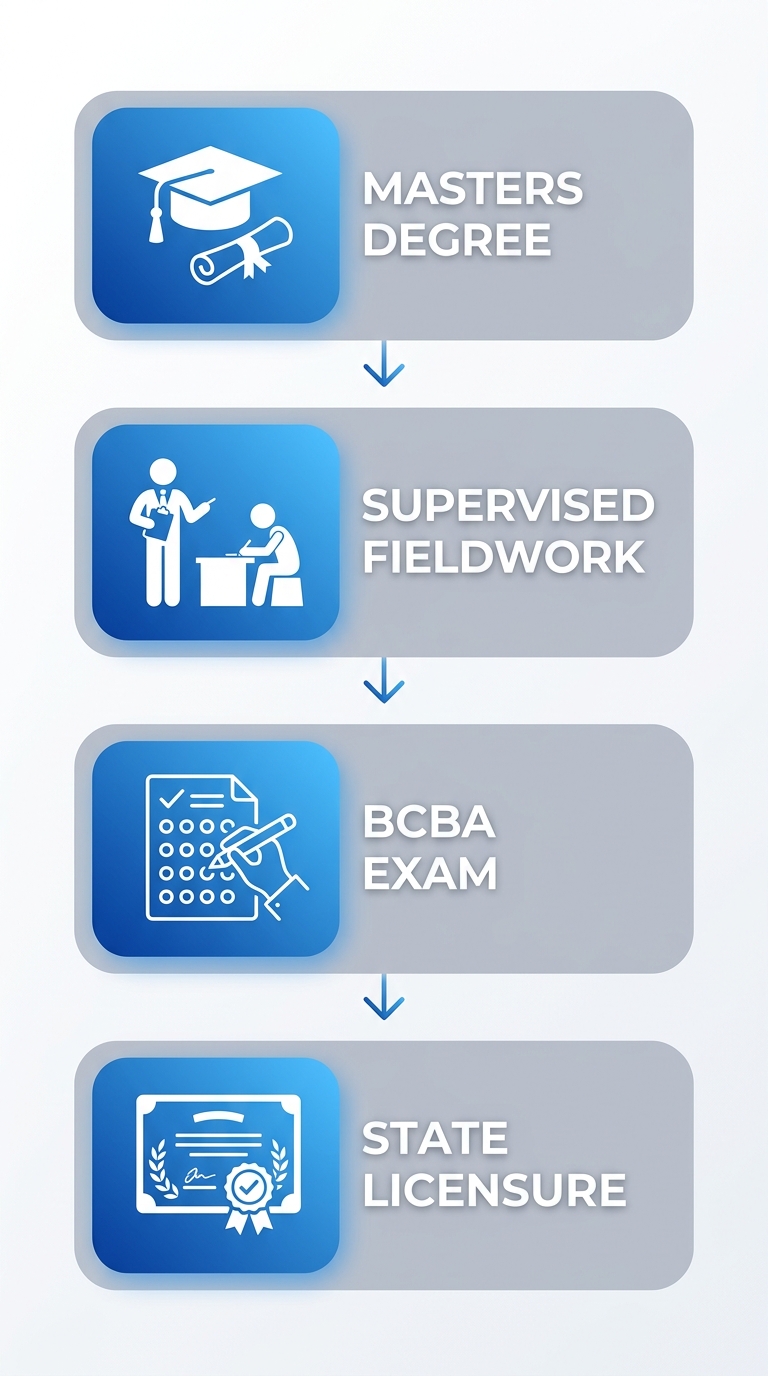
Table of Contents
- BCBA Career Outlook: What You Need to Know
- Foundations of the BCBA Profession
- BCBA Job Market: Growth, Salary, and Trends
- Steps to Launch and Advance Your BCBA Career
- Advancing in the ABA Therapy Field
- Frequently Asked Questions About BCBA Careers
- Your Path Forward in ABA Therapy
BCBA Career Outlook: What You Need to Know
Beyond understanding the role, you're likely wondering about the BCBA career outlook. As a board certified behavior analyst (BCBA), you’re entering a field with exceptional growth. Demand for BCBAs is skyrocketing, driven by rising autism diagnosis rates, expanded insurance mandates, and increased school-based services.
According to the Behavior Analyst Certification Board (BACB), job growth for behavior analysts is expected to exceed 20% over the next decade—far outpacing the national average. BCBAs work in diverse settings, including in-home therapy, schools, clinics, and telehealth, giving you flexibility to find a role that fits your lifestyle. This versatility contributes to the profession’s broad appeal and stable career prospects. The BCBA career outlook remains bright as more states adopt autism insurance laws and school systems expand special education services.
BCBA salary trends show that compensation has risen steadily alongside demand, often surpassing the national median for related fields. National BCBA job growth rates continue to outpace many other professions, and with certification through the BACB and ongoing continuing education, professionals can maintain a competitive edge. At Yes ABA Therapy, we see the impact of this growth every day. Our team helps children thrive through personalized care in in-home, school, and telehealth settings. While the outlook is strong, individual outcomes vary based on location, experience, and employer.
If you’re considering this rewarding career, now is a great time to explore certification. Now that you know the job market is strong, let’s explore the steps to earn your certification.
Foundations of the BCBA Profession
When you begin exploring the bcba career outlook, it helps to understand the profession’s foundational layers. A Board Certified Behavior Analyst (BCBA) is a graduate-level practitioner who designs, supervises, and refines evidence-based treatment plans grounded in applied behavior analysis. At Yes ABA Therapy, we see BCBAs as the clinical leaders who guide entire therapy teams by coordinating assessments, overseeing Registered Behavior Technicians (RBTs), and collaborating with families.
These three certification tiers—BCBA, BCaBA, and RBT—form a supervision hierarchy managed by the Behavior Analyst Certification Board (BACB). The table below outlines the key differences in education, supervised experience, exam requirements, and typical professional roles.
| Certification Level | Education Requirement | Supervised Experience | Exam | Typical Roles |
|---|---|---|---|---|
| BCBA | Master’s degree in behavior analysis, education, or related field | 2,000 hours (or 1,500 hours with a concentrated plan) | BACB BCBA Exam (150 questions) | Clinical supervisor, program manager, independent practitioner |
| BCaBA | Bachelor’s degree in behavior analysis or related field | 1,000 hours (standard) | BACB BCaBA Exam | Behavior technician supervisor, case manager |
| RBT | High school diploma (some college preferred) | 40-hour training + competency assessment | RBT Competency Assessment (no written exam) | Direct therapist, in-home or school-based provider |
As the table makes clear, each level involves a different investment in education and fieldwork, with the BCBA credential requiring the most intensive preparation. The BCaBA operates at an undergraduate level under BCBA supervision, while the RBT serves as the paraprofessional who implements daily interventions directly with clients.
All BCBA certifications are governed by the BACB board certified behavior analyst board, which sets and periodically updates the education and supervision standards. To earn the credential, candidates must hold a master’s degree in behavior analysis or a closely related field, complete 2,000 hours of supervised fieldwork (or 1,500 hours through a concentrated pathway), and pass the 150-question BCBA exam. According to the BACB, this rigorous process ensures that practitioners can conduct functional behavior assessments, write individualized treatment plans, and provide the clinical oversight that RBTs and BCaBAs depend on. Industry resources describe the BCBA role as that of a clinical architect—someone who continually analyzes data and adjusts programming to help each person make meaningful progress.
Looking ahead, both bcba salary trends and bcba job growth data suggest a strong professional landscape, though your personal results will depend on education, experience, and the setting you choose. Our team at Yes ABA Therapy stays grounded in the belief that every credential is a tool for helping children thrive through personalized ABA therapy. Results may vary based on individual conditions and circumstances.
BCBA Job Market: Growth, Salary, and Trends
With this foundational understanding of what a BCBA does, we explore the job market. Demand for a Board Certified Behavior Analyst is growing, and the bcba career outlook is strong.
Job Growth for a BCBA in Special Education
The overall bcba job growth in special education is driven by rising autism prevalence and federal mandates requiring behavioral interventions. According to the Behavior Analyst Certification Board (BACB) and Bureau of Labor Statistics (BLS), job expansion for BCBAs ranges from 10% to 27% nationally, with states like Texas projecting a 27% increase between 2024 and 2034. Special education laws such as IDEA ensure that students with autism receive individualized support, creating consistent need for BCBAs to conduct assessments and guide interventions. Many school districts are actively recruiting behavior analysts, and these roles span public schools, private therapeutic day schools, and early intervention programs. For professionals entering the field, job security is robust.
National Salary Trends and Outlook
National bcba salary trends show a median income between $75,000 and $90,000, with entry-level BCBAs earning around $65,000 and experienced analysts exceeding $95,000. Location and specialization heavily influence pay; specializations in school consultation and early intervention often command higher rates, while rural placements may offer loan forgiveness. The Bureau of Labor Statistics forecasts sustained growth for behavioral analysts, with BCBA-specific roles outpacing averages. Experienced BCBAs who supervise RBTs or manage programs can see their incomes rise sharply. The BACB's certificant data shows steady growth in newly certified analysts each year, but demand continues to outpace supply.
| State | Median BCBA Salary (2025) | Projected Job Growth (2024–2034) | Number of BCBAs |
|---|---|---|---|
| North Carolina | $78,000 | +25% | ~1,200 |
| Texas | $82,000 | +27% | ~3,500 |
| California | $90,000 | +20% | ~5,000 |
| New York | $85,000 | +22% | ~2,800 |
Sources: BACB, Bureau of Labor Statistics.
While California offers the highest median salary, Texas and North Carolina lead in job growth. The number of certified BCBAs in each state helps gauge competition; North Carolina’s relatively small pool of analysts can mean shorter job search times. In Texas, the large number of analysts still doesn’t meet the demand in public schools, so positions remain plentiful. These factors highlight the importance of researching local labor market conditions before choosing a practice location.
BCBA Career Prospects in North Carolina
North Carolina offers strong opportunities for BCBAs. With approximately 1,200 certified analysts and a median salary of $78,000, the state projects a 25% job growth through 2034. Much of this growth comes from expanding autism services and school-based ABA programs. Cost-of-living-adjusted salaries compare favorably to higher-paying coastal states, making it a practical choice. Major employers include school districts, private clinics, and in-home therapy providers. Telehealth expansions in rural areas add remote supervision roles, as noted in industry analyses. The demand is broad, spanning urban centers like Charlotte and Raleigh as well as rural mountain communities.
BCBA Career Outlook for 2025
The bcba career outlook for 2025 and beyond remains highly favorable. Industry projections from the BACB show the number of certified analysts climbing each year, but growth in autism diagnoses means demand still outpaces supply. Insurance parity laws and permanent telehealth adoption continue to broaden access, ensuring sustained need for BCBAs across the country. While exact numbers depend on state-level policy, broader trends point to steady job creation. New roles in research and corporate wellness are emerging, and school-based positions remain plentiful. In summary, earning BCBA certification is a reliable path to a secure, meaningful career.
Please note that results may vary based on individual conditions and circumstances. Understanding the market is crucial, but equally important is knowing how to enter the field.
Steps to Launch and Advance Your BCBA Career
The BCBA career outlook is strong, with demand for qualified behavior analysts continuing to grow across Texas and throughout the United States. We want to help you understand exactly what it takes to join this rewarding field and build a career that makes a real difference. Now let’s walk through the concrete steps to launch and advance your BCBA career.
Becoming a BCBA in Texas
To become a board certified behavior analyst in Texas, you will follow a structured pathway that ensures you are thoroughly prepared for clinical practice. The journey begins with earning a master’s degree from a program that includes a BACB-accredited Verified Course Sequence covering ethics, assessment, and intervention procedures.
After completing your degree, you must accrue supervised fieldwork hours, which can be completed through a standard track of 1,500 hours or a concentrated track of 1,000 hours, according to the Behavior Analyst Certification Board. During this period, a qualified supervisor oversees your direct behavior-analytic activities with clients. Once your fieldwork is complete, you will sit for the four-hour BCBA examination, which tests your knowledge of behavior-analytic principles and ethical standards. The final step is applying for your state license through the Texas Department of Licensing and Regulation, which formally authorizes you to practice as a BCBA in Texas.
Gaining Experience and Specializations
We believe that the best way to build confidence and clinical skill is through hands-on experience, even while you are still completing your coursework. Many future BCBAs begin by working as a Registered Behavior Technician, which allows them to deliver direct therapy, collect data, and learn practical techniques under the supervision of a credentialed analyst. This role often counts toward the supervised fieldwork hours you need for certification, making it a practical and strategic first step.
As you progress, we encourage you to explore specializations that align with your interests and the needs of the communities you hope to serve. Three common areas of focus include autism spectrum disorder, where you develop deep expertise in communication and social skills interventions, and school-based behavioral support, which centers on collaborating with educators to implement Individualized Education Program goals and classroom strategies. Feeding therapy is another impactful specialization that addresses mealtime behaviors and helps children develop healthier relationships with food through systematic desensitization and reinforcement. Seeking internships, shadowing senior BCBAs, and attending workshops in these areas will help you discover where your passions and talents can have the greatest impact.
Work Settings and Opportunities
Your BCBA certification opens the door to a variety of work settings, each offering unique advantages and considerations. The BCBA job growth across these environments continues to climb, reflecting the increasing recognition of behavior-analytic services in schools, clinics, and homes. As you review the options below, we want you to think about which setting aligns with your personal strengths, lifestyle preferences, and long-term professional goals. BCBA salary trends vary across settings, and the ranges below are drawn from BACB and BLS industry data, representing typical benchmarks for BCBA roles rather than guaranteed figures.
| Setting | Primary Duties | Pros | Cons | Typical Salary Range |
|---|---|---|---|---|
| In-Home | Direct therapy, caregiver coaching, behavior reduction plans | Flexible schedule, family collaboration, natural environment | Travel time, less peer support, variable cases | $75k–$85k |
| School | IEP support, teacher training, behavior intervention plans | Stable hours, team collaboration, impact on education | Bureaucracy, limited hands-on therapy, lower pay ceiling | $70k–$80k |
| Clinic | On-site therapy, group sessions, supervision of RBTs | Control over environment, peer interaction, resources | Less natural generalization, commute, structured hours | $80k–$95k |
| Telehealth | Remote supervision, caregiver consultation, virtual 1:1 | Work from home, broader client reach, flexibility | Requires strong tech skills, less direct interaction | $70k–$85k |
| Community | Community-based sessions, social skills groups, outings | Real-world skill building, flexible, high variety | Logistics, safety concerns, inconsistent hours | $75k–$85k |
Across all settings, BCBAs share core responsibilities including conducting functional behavior assessments, creating individualized treatment plans, and supervising RBTs to maintain ethical standards and therapy fidelity. The in-home setting, for example, allows for natural generalization of skills during family routines, while school-based practice involves collaborating on IEP goals and delivering teacher training that supports classroom-wide success.
Support that helps your child grow with confidence. We are here to help with therapy tailored to your needs, with no waitlist so you can get started today. Wherever you choose to practice, your BCBA certification opens doors to make a lasting impact. Helping children thrive through personalized ABA therapy is at the heart of everything we do.
Results may vary based on individual conditions and circumstances. Please consult a qualified healthcare professional or licensed behavior analyst for personalized advice.

Four key stages to launch your BCBA career illustrated
Advancing in the ABA Therapy Field
Becoming a Board Certified Behavior Analyst is just the beginning of a fulfilling journey. As we look at the BCBA career outlook, advanced certifications can unlock higher earning potential, leadership roles, and research opportunities, while deepening our commitment to helping children thrive through personalized ABA therapy. Specialized credentials give us the tools to make an even greater impact for the families we serve.
The requirements for advanced certifications are outlined by the Behavior Analyst Certification Board (BACB), ensuring quality and consistency across the profession. Those aiming for clinical directorship or academia often pursue the BCBA-D, while OBM specialization suits professionals interested in management and systems change. VB certification is ideal for those passionate about communication and language development, particularly in school-based settings.
The broader BCBA career outlook remains strong, supported by robust BCBA job growth and positive BCBA salary trends. According to the Behavior Analyst Certification Board, demand for qualified behavior analysts continues to rise as autism awareness and insurance coverage expand. Advanced credentials not only enhance our earning potential but also bring us closer to helping children thrive through personalized ABA therapy. By investing in specialized training, we can shape the future of behavior analysis while building a fulfilling career.
Frequently Asked Questions About BCBA Careers
Here’s what you need to know about the BCBA career outlook, featuring data from BACB and BLS.
What is the Job Growth for a BCBA in Special Education?
The bcba job growth in special education settings remains high. BLS data shows a projected growth rate over 15% for behavior analysts in schools, supported by BACB statistics on school-based service expansion. This surge reflects broader acceptance of ABA interventions.
What is the Future Outlook for BCBA Jobs in ABA Therapy?
The future outlook for BCBA jobs in ABA therapy is strongly positive. Increasing autism awareness and expanded insurance mandates are driving sustained demand across clinical, school, and home environments, creating abundant opportunities.
What are the BCBA Salary Trends and Career Prospects in North Carolina?
bcba salary trends in North Carolina continue upward, mirroring national growth. Strong regional demand and an expanding ABA sector ensure bright career prospects.
What is the BCBA Career Outlook for 2025?
For 2025, the BCBA career outlook remains strong, with job growth and salary increases continuing as demand stays high across the field.
Results may vary based on individual circumstances.
Your Path Forward in ABA Therapy
Now, let’s explore the BCBA career outlook. As a BCBA, you’ll find a strong job market and diverse work settings.
| Advanced Credential | Requirements | Typical Career Impact | Who Should Pursue |
|---|---|---|---|
| BCBA-D (Doctorate) | Doctoral degree + BCBA certification + additional supervision | Higher salary potential, research roles, university faculty | Those aiming for academia or clinical directorship |
| OBM (Organizational Behavior Management) Specialist | BCBA + OBM coursework or certificate | Leadership roles in ABA agencies, consulting, corporate training | Those interested in management and systems change |
| Verbal Behavior (VB) Specialist | BCBA + intensive VB training/mentorship | Specialized caseloads, higher demand in school settings | Those passionate about communication and language development |
Based on data from the BLS and BACB, BCBA salary trends show a median of $75,000–$85,000, and BCBA job growth is projected at 22%—far exceeding related roles. Plus, BCBAs work in varied settings like home, clinic, school, and telehealth.
Ready to take the next step? The certification process is clear and structured. Individual treatment outcomes depend on patient factors and clinical circumstances.
Resources
- Discover the Complete Guide to BCBA Certification
- Understand the Role of a Board Certified Behavior Analyst
- Learn How to Become a Board Certified Behavior Analyst
- Find Out What a BCBA Does in ABA Therapy
- Get Expert In-Home ABA Therapy in Montgomery County
- Explore Person-Centered ABA Therapy in San Diego
- Discover Mindfulness Counseling Options in San Diego
- Visit BACB Official Site for Certification Info
