
Aba Trends 2026: How AI Is Transforming Autism Therapy

Table of Contents
- ABA Trends in 2026: A New Era for Autism Therapy
- How ABA Therapy Is Evolving in 2026
- The Latest ABA Trends Shaping Autism Care
- Impact of 2026 Trends on Early Intervention
- ABA Workforce Trends in the United States for 2026
- New Developments in ABA for Autism Care and In-Home Therapy
- Embracing the Future of ABA Therapy
ABA Trends in 2026: A New Era for Autism Therapy
As we look ahead to 2026, several exciting aba trends 2026 are reshaping autism therapy, making it more accessible, personalized, and effective than ever before. Our field is embracing innovation while keeping the focus where it belongs—on your child and family.
A major advancement is the use of ai in aba therapy, where smart data analysis helps our clinicians tailor interventions and track progress with greater precision, reducing administrative tasks so more time is spent directly with your child. Alongside this, telehealth aba therapy continues to expand access for families with busy schedules or those in remote areas, maintaining the warm, personal connection that makes therapy meaningful.
These tools don’t replace the human touch—they enhance individualized, family-centered care. Providers like Yes ABA Therapy are already incorporating these innovations into their programs, blending modern technology with compassionate support. For families exploring ABA therapy in Lakewood, New Jersey, we invite you to learn more about how our modern, evidence-based approach can help your child grow with confidence.
Disclaimer: Results may vary based on individual conditions and circumstances. Please consult a qualified healthcare professional or licensed behavior analyst for personalized advice.
How ABA Therapy Is Evolving in 2026
As ABA therapy continues to evolve, we embrace new strategies to support children and families in 2026. The field integrates technology and adapts methodologies based on the latest research. At Yes ABA Therapy, we track aba trends 2026 to deliver personalized, evidence-based care. These shifts move toward more flexible, child-centered approaches.
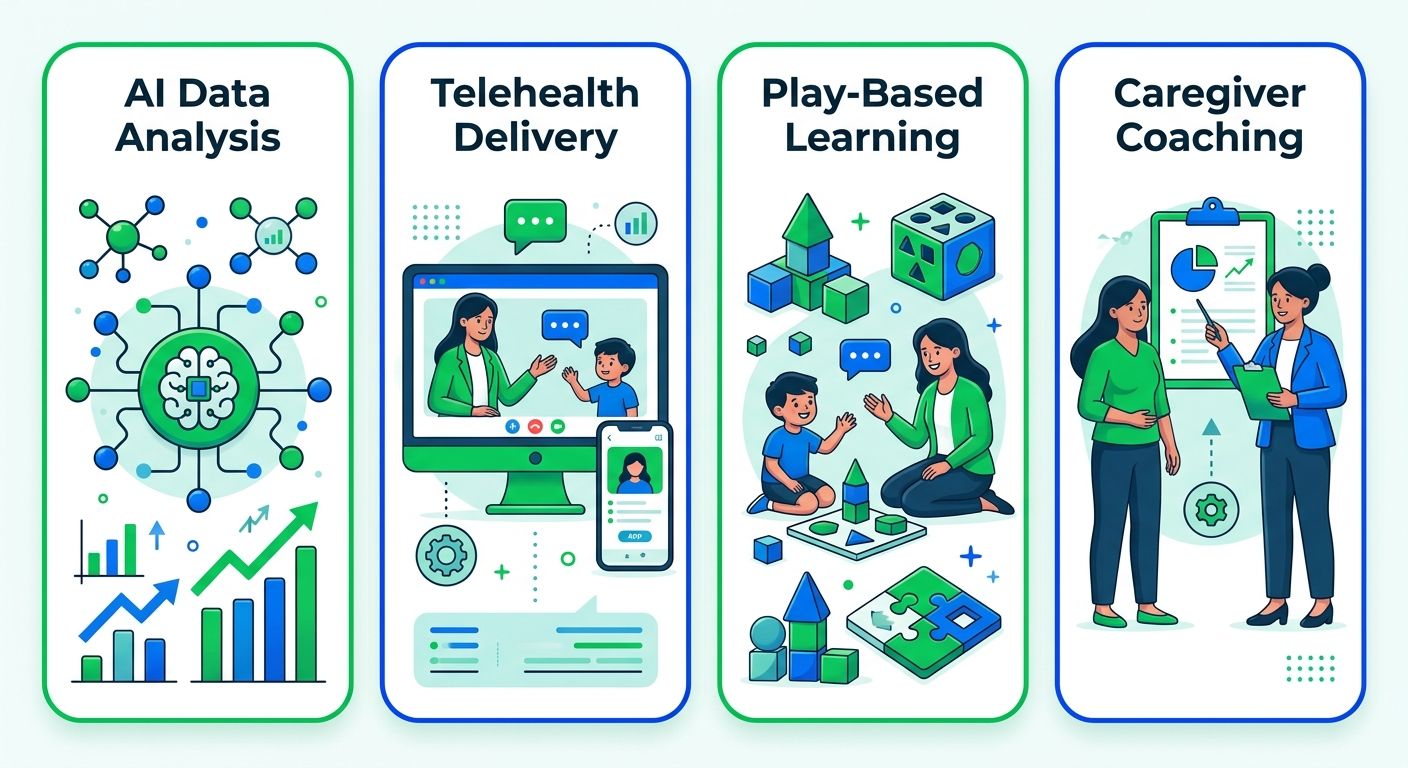
The use of ai in aba therapy enhances real-time data analysis, helping BCBAs detect behavioral patterns and refine goals quickly. Our BCBA-supervised, data-driven plans at Yes ABA Therapy incorporate these insights, ensuring each program stays closely aligned with a child’s progress. This technology supports clinical judgment rather than replacing it.
Telehealth aba therapy expands access significantly. Through secure video sessions, we deliver high-quality care to families in Montgomery County, MD, San Diego, CA, and other regions. Remote delivery removes travel barriers and lets children receive support in familiar environments, improving attendance and engagement.
The shift toward naturalistic, play-based interventions embeds learning into daily routines. Our therapists use play to teach communication, social, and self-help skills in a motivating, natural way, promoting better generalization.
We prioritize parent and caregiver coaching. Our training groups give families practical strategies for mealtime, play, and community outings, building consistency and accelerating progress outside sessions.
These aba trends 2026 reflect a commitment to responsive, data-driven therapy. Organizations such as the International Behavior Analysis Association provide guidelines that shape these ethical, evidence-based practices.
These innovations allow us to combine AI-enhanced data, flexible delivery, and naturalistic teaching for truly individualized care.
The Latest ABA Trends Shaping Autism Care
ABA therapy continues to evolve, and the latest aba trends 2026 reflect exciting developments that make care more effective and accessible than ever. As the field advances, families benefit from innovative tools and approaches that prioritize each child's unique needs.
Artificial intelligence is emerging as a powerful ally in ABA therapy. ai in aba therapy helps clinicians analyze behavioral data in real time, allowing for more precise intervention adjustments. By identifying patterns and progress trends, AI supports BCBA decision-making without replacing the human connection at the heart of therapy.
Another major shift is the expansion of telehealth services. telehealth aba therapy removes geographic barriers, enabling children in underserved areas to receive consistent support from licensed professionals. Remote sessions offer flexibility for busy families and maintain therapeutic continuity when in-person visits aren't possible.
Perhaps the most meaningful trend is the growing emphasis on person-centered care. This approach respects a child's preferences, strengths, and family goals, moving beyond one-size-fits-all protocols. Our approach to person centered ABA therapy in San Diego reflects this shift toward individualized care, where therapy plans are co-created with families and adapted as the child grows.
Impact of 2026 Trends on Early Intervention
The conversation around aba trends 2026 is more than a forecast—it is already reshaping the way we think about early intervention. Among these emerging developments, artificial intelligence and telehealth stand out for their potential to personalize care and expand access.
Artificial intelligence is bringing a new level of precision to early intervention. Through ai in aba therapy, our clinicians can analyze behavioral data more quickly and accurately, leading to treatment plans that adapt in real time to a child’s progress. Rather than replacing human judgment, AI supports our BCBAs by highlighting patterns, tracking subtle improvements, and suggesting evidence-based adjustments.
Telehealth aba therapy is breaking down the traditional barriers of geography and scheduling. Families in Montgomery County, MD, and San Diego, CA, for example, can now maintain consistent sessions even when in-person visits are difficult. This continuity is critical for early learners, who thrive on routine and frequent reinforcement.
ABA Workforce Trends in the United States for 2026
As we look at ABA trends 2026, several workforce developments are reshaping how therapy is provided across the United States. Our field is adapting to meet rising demand while embracing technology and new service delivery models that help families access care more quickly.
We see growing demand for Board Certified Behavior Analysts (BCBAs) and registered behavior technicians (RBTs) as autism diagnosis rates increase and insurance coverage expands. Industry data indicates that workforce capacity is struggling to keep pace with referrals, making it essential for providers to develop efficient hiring and training systems.
Telehealth ABA therapy has expanded access to care for families in underserved areas where in-person services were previously limited. Remote sessions allow BCBAs to reach children in rural communities and provide parent coaching without geographic barriers. Many providers are currently exploring hybrid models that combine in-home visits with virtual supervision.
New Developments in ABA for Autism Care and In-Home Therapy
ABA therapy is a proven, evidence-based approach that helps children with autism build communication, social, and daily living skills. The latest aba trends 2026 show a clear shift toward personalized, technology-driven, and family-centered care, making in-home therapy more accessible and engaging than ever before.
AI in ABA Therapy
AI in ABA therapy is transforming intervention design by analyzing behavioral data in real time. Intelligent platforms help our BCBAs spot patterns and adjust goals quickly, ensuring each session builds on recent progress for responsive, efficient care.
Telehealth Expansion
Telehealth ABA therapy expands our ability to deliver consistent support at home. Through secure live video, clinicians coach parents during everyday routines, adjust strategies in the moment, and reduce travel, helping children generalize skills in familiar settings.
Embracing the Future of ABA Therapy
Building on the strong foundation of ABA therapy, ABA trends in 2026 highlight a shift toward data-driven, personalized care. At Yes ABA Therapy, we integrate these innovations to help children and families achieve meaningful progress. Individual results vary; please consult a licensed behavior analyst for personalized advice.
Resources
- International Behavior Analysis Association
- Behavior Analyst Certification Board Resources
- Council of Autism Service Providers Membership
- Early Signs of Autism
