
.avif)

.avif)


Table of Contents
The Role of AI in Modern ABA Therapy
While traditional ABA therapy relies on direct observation, today’s providers are integrating AI to deepen insights. To understand how AI is reshaping ABA therapy meaning, it helps to recognize the evidence-based, data-driven methodology that has always defined our work. At Hidden Gems ABA, we view AI in ABA therapy as a tool to enhance—not replace—the clinical judgment of our Board Certified Behavior Analysts (BCBAs).
The application of AI in ABA therapy allows our BCBAs to detect subtle behavioral patterns faster, enabling more responsive adjustments to treatment plans. According to Hidden Gems ABA, ABA therapy is a scientific discipline designed to promote communication, social, and independence skills. Our personalized, data-driven service model—covering in-home and at-school therapy across New Jersey, North Carolina, Arizona, Colorado, and Utah—reflects this evidence-based foundation. Current ABA trends include the use of telehealth ABA therapy, where AI can automate session summaries and help families stay connected from home. These tools do not replace the skilled BCBAs who design every treatment plan; they augment their ability to monitor progress and personalize interventions, reinforcing our personalized approach to treatment.
We also incorporate AI-assisted caregiver training tools, such as automated session summaries, to keep families informed and strengthen skill generalization. This collaborative, data-driven method exemplifies how technology supports—not substitutes—human expertise. AI is not a replacement for skilled BCBAs—it is a resource that helps us fine-tune treatment, and as with all therapeutic approaches, results may vary based on individual circumstances. We explore these benefits further in the next section.
How AI is Transforming ABA Therapy Fundamentals
While the core principles of ABA remain unchanged, AI in ABA therapy is transforming how those principles are applied in daily practice. AI automates data collection, enables real-time tracking of progress, and supports therapists with instant insights—augmenting, not replacing, the clinical expertise of BCBAs and RBTs.
The following comparison shows how AI-enhanced processes differ from traditional methods in data collection, treatment personalization, progress analysis, and therapist support.
Comparison Table: Traditional ABA vs. AI-Enhanced ABA
| Feature | Traditional ABA | AI-Enhanced ABA |
|---|---|---|
| Data Collection | Paper-based or simple digital logs; requires manual summarization and analysis by BCBA. | Automated data capture via sensors, apps, and session recording; real-time aggregation and trend analysis. |
| Treatment Personalization | Goals reviewed and updated periodically based on BCBA observation and supervision notes. | AI synthesizes daily session data across multiple domains to recommend goal adjustments in near-real-time. |
| Progress Analysis | Analyzed during supervision sessions and quarterly reviews; relies on clinical judgment. | Continuous analysis of mastery and behavior trends; predictive modeling flags plateaus or regressions early. |
| Therapist Support | On-site BCBA supervision and phone/email check-ins. | In-session prompts, automated data entry, and decision-support alerts for RBTs and BCBAs. |
Each area in the table illustrates a shift from periodic, manual work to continuous, data-driven insight. Data collection, once reliant on paper logs and manual summarization, now benefits from automated sensors and apps that capture behavior in real time. AI aggregates this data instantly, giving BCBAs immediate visibility into skill acquisition and behavior trends without tedious administrative work. Treatment personalization moves from quarterly updates to near-real-time adjustments as AI synthesizes daily session data across domains such as communication, social skills, and behavior reduction, recommending goal modifications dynamically. Progress analysis is revolutionized by continuous modeling that flags plateaus or regressions early. According to NIH medical research, AI-driven analytics can detect these shifts sooner than traditional supervision methods, allowing clinicians to intervene proactively. Therapist support is similarly improved: in-session prompts and automated data entry reduce the documentation burden on RBTs, while decision-support alerts help BCBAs prioritize supervision needs. These enhancements do not replace the therapist but rather provide a richer informational backdrop for clinical decisions.
At Hidden Gems ABA, we have embedded these AI tools within our in-home and at-school therapy, enabling our team to maintain a continuous feedback loop between sessions and supervision. This approach ensures that every child’s treatment plan remains aligned with their most recent progress, reinforcing our commitment to a personalized approach to treatment.
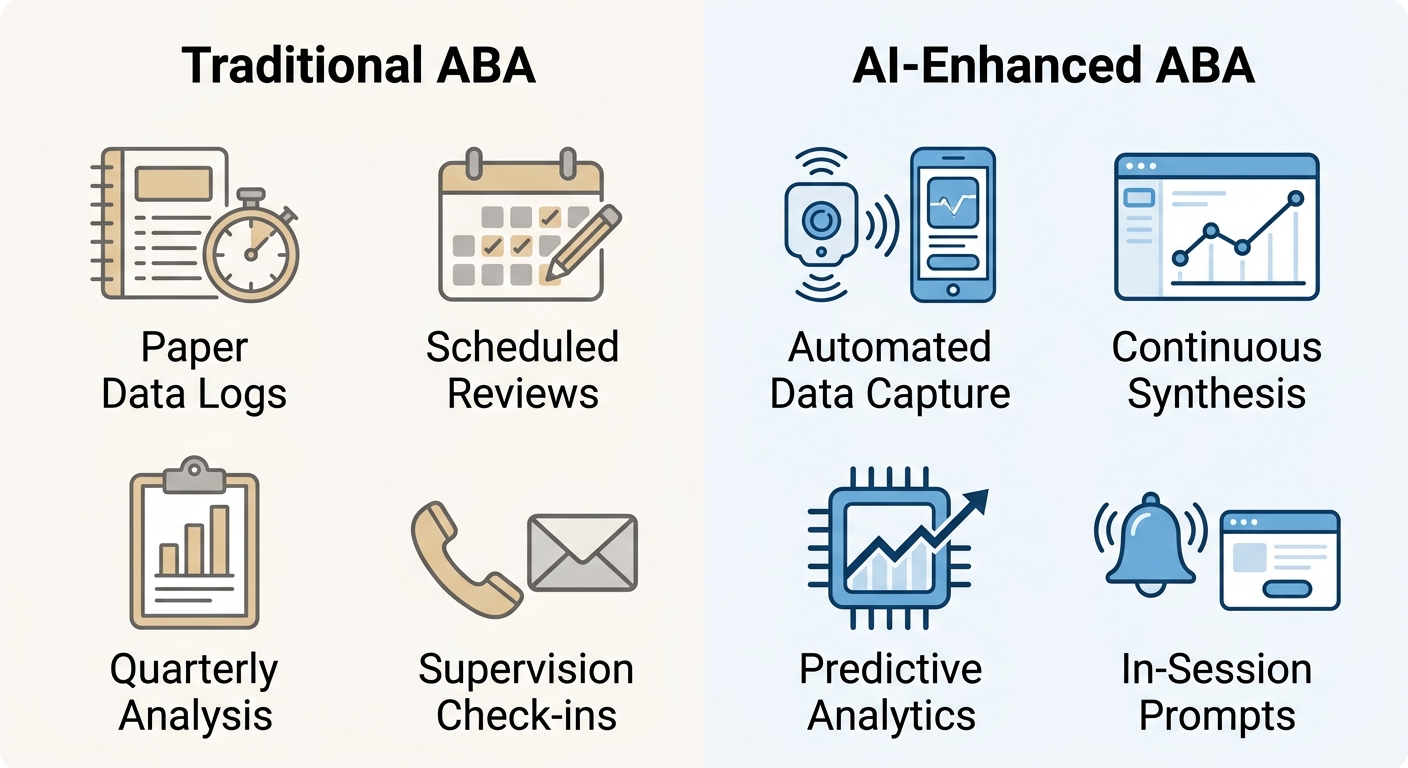
Traditional vs AI-enhanced ABA: a side-by-side comparison
These advancements do not replace the clinical judgment of BCBAs; rather, they equip us with richer data and faster insights to support our comprehensive and collaborative approach. Current trends in ABA show a shift toward continuous data synthesis and responsive care, and telehealth for ABA therapy further expands the reach of AI-supported supervision. This data-driven, human-centered foundation sets the stage for understanding the specific AI tools reshaping our practice today.
Emerging Research and AI Applications in Autism Therapy
Beyond established ABA techniques, emerging research is exploring how artificial intelligence can enhance therapy outcomes. The integration of AI in ABA therapy is transforming how behavioral data is collected, analyzed, and applied to personalize treatment for children with autism. At Hidden Gems ABA Therapy, we follow these developments closely to ensure our comprehensive and collaborative approach remains at the forefront of evidence-based care.
AI-Powered Data Analytics in Behavioral Health
Machine learning algorithms are now being applied to large-scale behavioral data sets, uncovering patterns that can inform clinical decisions. By processing session data on skill acquisition rates, challenging behaviors, and environmental variables, AI can identify subtle trends that manual analysis might overlook. For instance, these tools can predict when a child is likely to master a specific skill, allowing BCBAs to adjust intervention strategies proactively. They can also flag early signs of regression, prompting timely adjustments before skills are lost. This data-driven approach mirrors the precision we already apply in ABA Therapy For Your Child’s Success, enhancing our ability to monitor progress and adapt goals. These advances are part of broader trends in ABA therapy that prioritize real-time data over intuition alone. Moreover, the same analytics can support telehealth ABA therapy by analyzing remote data streams from parent-implemented interventions, ensuring consistent monitoring even outside of direct therapy sessions.
Predictive Modeling for Personalized Treatment Plans
Predictive models combine information from comprehensive intake assessments, daily one-on-one session data, and caregiver notes to recommend individualized goals and intervention strategies. These AI-driven tools can analyze historical outcomes from similar profiles to suggest which teaching procedures—such as discrete trial training or natural environment teaching—may yield the best results for a specific child. For example, based on a child’s initial assessment and ongoing performance data, a model might propose a focus on social communication skills next, with specific targets like turn-taking or initiating play. This aligns seamlessly with our in-home & at-school ABA therapy model, where BCBAs already design personalized treatment plans. AI supplements their expertise by highlighting correlations between variables like sleep patterns, mealtime behavior, and therapy outcomes, offering a more holistic view of a child’s progress. At Hidden Gems, we incorporate these insights while maintaining the essential human judgment that ensures each plan remains tailored to the unique strengths and needs of every child.
Current Research Breakthroughs and Collaborations
A growing body of literature from reputable research organizations is validating the role of AI in ABA therapy. The National Institutes of Health (NIH) has funded large-scale clinical trials and maintains public databases on AI interventions for autism, providing a foundation for evidence-based practice. Recent studies published by Frontiers Scientific Publishing have shown promising results in AI-aided behavioral analysis, particularly in identifying early markers of skill acquisition and tailoring reinforcement schedules. Meanwhile, the Journal of Pediatric Neonatal Medicine has contributed research on AI applications in early childhood behavioral interventions, including tools for diagnostic support and personalized intervention planning. These findings confirm that AI can augment—not replace—the clinical expertise of BCBAs. For families seeking the most current developments, understanding the credibility of sources is essential.
Comparison Table: Key Research Entities in AI for ABA Therapy
| Agency / Publisher | Focus Area | Key Contribution | Access |
|---|---|---|---|
| National Institutes of Health (NIH) | AI in Behavioral Health, Data Analytics, Autism Research | Funding, large-scale clinical trials, and public databases on AI interventions for autism. | Publicly available via grants and publications |
| Frontiers in Psychology | Peer-reviewed research on AI in developmental therapies | Rapid publication of novel studies on AI tools, efficacy data, and ethical frameworks for ABA. | Open access via Frontiers Scientific Publishing |
| Journal of Pediatric Neonatal Medicine | Pediatric care technology, early intervention AI tools | Research on AI applications in early childhood behavioral interventions and diagnostic support. | Subscription and open-access articles |
This table highlights where families and clinicians can find reputable, peer-reviewed evidence on AI in ABA. Credibility of sources is critical when evaluating new technology. While AI-driven insights offer exciting possibilities, results may vary based on individual circumstances. The information on this site is for educational purposes only and does not substitute for professional medical or behavioral-health advice. Please consult with a healthcare professional or Board Certified Behavior Analyst (BCBA) for personalized advice. For details on our HIPAA Notice of Privacy Practices concerning patient privacy, please visit our website or contact us.
As AI research progresses, families can look forward to more personalized and data-driven ABA therapy options.
Practical AI Tools and Strategies for ABA Therapy
Beyond these foundational methods, modern ABA increasingly leverages artificial intelligence to enhance effectiveness and efficiency. As we integrate ABA therapy for kids near me services with cutting-edge tools, families gain access to real-time insights and more personalized interventions. The rise of ai in aba therapy is reshaping how we collect data, design treatment plans, and deliver consistent support across environments.
AI-Assisted Data Collection and Progress Tracking
Automated tools instantly capture frequency, duration, and interval data during sessions, reducing manual paperwork. In our play-based approach, as demonstrated in our play-based ABA therapy resource, AI-enhanced systems record responses as children engage in naturalistic activities, feeding real-time dashboards that display skill acquisition, mastery percentages, and trend lines. BCBAs and families view visualizations that turn periodic reviews into daily clinical adjustments. This ai in aba therapy advancement enables RBTs to prioritize direct interaction over documentation. According to our internal methodologies, data is collected throughout every session to track communication, social, and daily living skills. AI dashboards give families a transparent window into progress, though results may vary based on individual circumstances.
Personalized Treatment Plans with AI Insights
Our personalized approach uses AI to synthesize initial assessments and session notes. By cross-referencing mastered skills with developmental norms, systems suggest attainable yet challenging goals, streamlining BCBA treatment plan updates. For children with substantial support needs, as outlined in our low-functioning autism resource, AI leverages skill-building strategies to recommend next therapy targets tailored to each child’s profile. This insight helps our clinical team adjust interventions more rapidly. AI-generated summaries also highlight home practice areas for caregivers, reinforcing our comprehensive and collaborative approach. Individual outcomes will vary.
Integrating Telehealth and AI for Remote Therapy
Telehealth aba therapy broadens access, and AI analysis makes remote sessions more effective. Our platform enables BCBAs to supervise RBTs and engage with families in real time across home, school, and community settings. Behavior prediction analytics identify antecedents and patterns, informing proactive strategies even without the therapist physically present. This consistent support is vital for families across our five states who need flexible scheduling. By embedding AI into telehealth, we maintain data-driven care and caregiver training standards that define our in-person model. Staying current with aba trends helps us deliver accessible therapy without sacrificing personal connection.
The following table summarizes common AI features available in ABA practice, highlighting how each tool supports clinicians and families.
| Feature | Primary User | Application in ABA | Benefit |
|---|---|---|---|
| AI Tool Feature | Therapist / BCBA | Automates session note data entry, reduces paperwork time, increases data points collected. | More accurate progress tracking, more time for direct therapy. |
| Skill Mastery Tracking | BCBA & RBT | AI analyzes session performance across goals to calculate mastery percentages and trends. | Real-time visibility into what’s working; faster goal adjustments. |
| Behavior Prediction Analytics | BCBA & Care Team | Models identify antecedents and patterns correlated with challenging behavior. | Proactive intervention design; reduces frequency and intensity of episodes. |
| Personalized Goal Recommendation | BCBA | AI cross-references assessment results, mastered skills, and developmental norms to suggest next goals. | Streamlines treatment planning; ensures goals are challenging yet attainable. |
These features help families and clinicians evaluate which AI capabilities align with their priorities, though individual results may vary. To explore what tools best fit your child’s needs, speak with your BCBA during your next review. We integrate these AI strategies into our HIPAA-compliant systems and always pair them with clinical oversight. At Hidden Gems ABA, we are committed to ABA Therapy For Your Child's Success through innovation and personalized care.
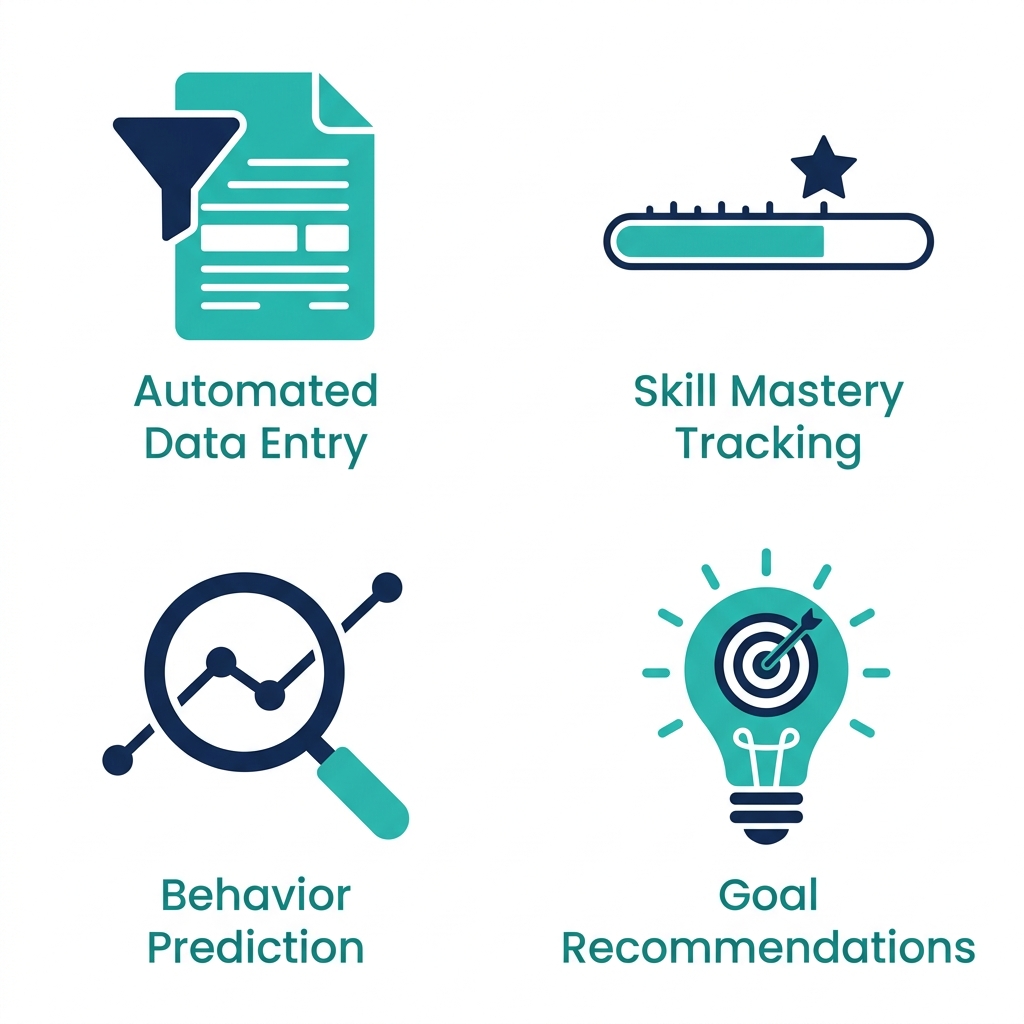
Icon set of AI tools for ABA therapy data and personalization
Navigating Challenges and Future Trends in AI-Powered ABA
As ai in aba therapy evolves, understanding its challenges and future trends is essential for families and clinicians alike. While AI brings powerful tools to personalize care, it also introduces obstacles that require thoughtful navigation. Our team is dedicated to adopting responsible innovations that enhance, rather than replace, the clinical judgment of our Board Certified Behavior Analysts.
The following table outlines common integration challenges and actionable mitigation strategies that clinics can implement.
Comparison Table: AI Integration Challenges and Mitigation Strategies
| Challenge | Description | Mitigation Strategy |
|---|---|---|
| Data Privacy and Security | AI systems require large datasets of sensitive behavioral information, raising concerns about HIPAA compliance and data breaches. | Use encrypted, HIPAA-compliant platforms; anonymize data where possible; limit data access to essential clinical team members. |
| Integration with Existing Systems | Many clinics use established EMR and data collection systems; adding AI tools can create workflow friction. | Select AI tools with robust API integration; phase implementation gradually; provide hands-on training for staff. |
| Therapist Training and Adoption | RBTs and BCBAs may be unfamiliar with AI dashboards and skeptical of algorithmic recommendations. | Offer comprehensive training sessions; involve therapists in tool selection; show clear time-saving benefits to build buy-in. |
| Ensuring Equitable Access | Not all families have reliable internet or devices for AI-enhanced telehealth or data collection apps. | Provide device loaner programs; offer offline-capable tools; work with community partners to bridge the digital divide. |
Each of these four challenges—data privacy, integration, therapist training, and equitable access—requires a deliberate strategy. For instance, using encrypted, HIPAA-compliant platforms addresses the privacy concerns highlighted by MediaRE Research, while gradual implementation and hands-on training help therapists embrace AI-driven recommendations. Equally important is ensuring that all families across our service areas in New Jersey, North Carolina, Arizona, Colorado, and Utah have the necessary technology and support, which we address through device loaner programs and community partnerships.
Beyond these challenges, emerging aba trends signal a new era of technology-enhanced care. The expansion of telehealth aba therapy has already improved access for families in underserved areas, and we anticipate that AI-driven predictive analytics will further refine behavior tracking and treatment modifications. For broader healthcare applications of AI in pediatric care, recent findings published in the Journal Pediatric Neonatal Medicine highlight promising cross-disciplinary benefits. Our clinical team stays abreast of these advances to ensure that any new tool we adopt upholds our commitment to evidence-based, personalized intervention.
At Hidden Gems ABA, our in-home & at-school ABA therapy is built on a comprehensive and collaborative approach, so your child receives a personalized approach to treatment that embraces responsible AI advancements. We are here to deliver ABA Therapy For Your Child's Success.
Common Questions About AI and ABA Therapy
Let's address some common questions families have about AI in ABA therapy.
How is AI integrated into ABA therapy? When families ask about ai in aba therapy, they wonder how technology supports our evidence-based model. Our BCBA-supervised program uses AI to rapidly analyze behavioral data and identify patterns. All clinical decisions remain with our therapists.
Will AI replace ABA therapists? No. The use of ai in aba therapy focuses on enhancing, not replacing, human-led interventions. BCBAs supervise every session, and AI only accelerates data processing. As aba trends evolve, AI supports behavior analysts without replacing personal care. Our family-centered approach remains unchanged.
How does AI support local ABA services? For families in Spring, our ABA therapy for children in Spring integrates AI-powered progress tracking for real-time skill insights, while all data is HIPAA-compliant. This ensures personalized care under BCBA supervision, with caregivers receiving transparent updates. If you’re considering ABA therapy, we’re ready to discuss our AI integration.
Embracing the Future of ABA Therapy
Looking ahead, the field of ABA therapy is evolving rapidly, with AI in ABA therapy emerging as a powerful tool.
As a data-driven discipline, artificial intelligence in ABA helps BCBAs analyze behavioral patterns, monitor progress, and refine treatment plans without replacing clinical judgment.
Meanwhile, telehealth ABA therapy and emerging ABA trends like remote caregiver training expand access across our service areas in New Jersey, North Carolina, Arizona, Colorado, and Utah.
We remain committed to evidence-based, BCBA-led, family-centered care, and we are actively integrating these innovations to enhance our comprehensive, collaborative approach. Results may vary based on individual circumstances.


